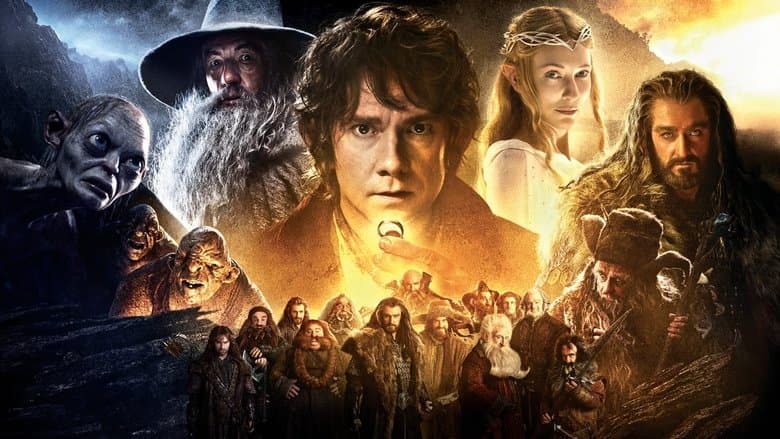
Famous Wizards from Fiction
Famous Wizards From Fiction is a structured entertainment dataset with 15 entries. Its fields include Wizard, Source Material, Creator. Community voting appears as a separate signal beside eligible rows and does not replace the source values.
Every row is shown below and is also available as CSV, JSON, or Excel.
Dataset details
- Table scope
- All 15 rows
- Fields
- 5 columns
- Source
- Community curated
- Data updated
- Mar 7, 2026
Included fields: Wizard, Source Material, Creator, Magical Specialty, Known For.
The table contains every record in this dataset; the same records are available in each download format.
Preview observations
No reliable range or grouping can be calculated from the loaded rows without interpreting the source data.
Useful for
- Comparing Wizard, Source Material, and Creator across entertainment entries
- Building reference tables, charts, or analyses from 15 downloadable records
Wizard↕ | Source Material↕ | Creator↕ | Magical Specialty↕ | Known For↕ |
|---|---|---|---|---|
Gandalf | The Lord of the Rings (1954) | J.R.R. Tolkien | — | The definitive wizard of modern fantasy, Gandalf the Grey — later Gandalf the White — is not merely a human who learned magic but a Maia, an angelic being sent to Middle-earth in the form of an old man to rally the free peoples against Sauron, his famous 'You shall not pass!' confrontation with the Balrog on the Bridge of Khazad-dûm is the most iconic wizard moment in all of literature and cinema, Ian McKellen's portrayal in Peter Jackson's films gave Gandalf a warmth and gravitas that made him feel simultaneously ancient and approachable, Tolkien deliberately limited Gandalf's use of spectacular magic because his purpose was to inspire and guide rather than to solve problems with power, Gandalf established the template that every subsequent wizard — from Dumbledore to Obi-Wan Kenobi — would follow: the wise old mentor who knows more than he reveals and whose apparent death is not the end |
Albus Dumbledore | Harry Potter (1997–2007) | J.K. Rowling | — | The headmaster of Hogwarts and the only wizard Lord Voldemort ever feared, Dumbledore initially appears as a twinkling-eyed benevolent grandfather figure who offers cryptic advice and lemon drops, but as the series progresses Rowling reveals him as a deeply flawed manipulator who raised Harry Potter as a lamb for slaughter in a long-term plan to defeat Voldemort, this complexity — the revelation that the kindly mentor was capable of cold strategic calculation — is one of the most effective character arcs in children's literature, his duel with Voldemort in the Ministry of Magic atrium demonstrated magical power on a scale the series had never shown, Michael Gambon's more volatile interpretation after Richard Harris's death divided fans but captured Dumbledore's intensity, his sexuality — confirmed by Rowling after the series ended — made him one of the most prominent LGBTQ characters in children's fiction and sparked debates about representation that continue to this day |
Merlin | Arthurian legend (c. 12th century onward) | Geoffrey of Monmouth / various | — | The original wizard whose legend predates all others in Western literature, Merlin first appeared in Geoffrey of Monmouth's Historia Regum Britanniae around 1136 as a prophet and adviser to British kings, his story evolved through centuries of retelling — he engineered the conception of King Arthur through magical deception, created the Round Table, established Camelot, and was ultimately trapped forever by the enchantress Nimue using his own magic against him, Merlin is the source of virtually every wizard archetype that followed: the long beard, the robes, the staff, the prophecies, the role as adviser to kings, T.H. White's The Once and Future King reimagined him as living backwards through time — growing younger while everyone else ages — giving him knowledge of the future because he has already lived it, Disney's The Sword in the Stone made him a bumbling comedic figure, every fictional wizard from Gandalf to Dumbledore to Obi-Wan is ultimately a descendant of Merlin's literary DNA |
Rincewind | Discworld (1983–2015) | Terry Pratchett | — | The most incompetent wizard in fantasy literature and one of the funniest characters ever created, Rincewind is a wizard at Unseen University on the Discworld who cannot perform magic because one of the eight great spells from the Octavo lodged itself in his mind as a student and crowded everything else out, his primary skill is cowardice — he can run away from danger faster and more creatively than anyone alive, Pratchett used Rincewind as a satirical inversion of every wizard trope: he wears a pointed hat with 'WIZZARD' misspelled on it, carries the Luggage — a sentient and homicidal travel chest made of sapient pearwood — and stumbles through adventures he desperately wants no part of, despite his incompetence he has saved the world multiple times entirely by accident, Rincewind is Pratchett's commentary on the absurdity of the heroic wizard archetype — proof that the universe has a sense of humor and that sometimes the most important person in the room is the one trying hardest to leave it |
Doctor Strange | Marvel Comics (1963) | Stan Lee / Steve Ditko | — | The Sorcerer Supreme of the Marvel Universe, Dr. Stephen Strange was a brilliant but arrogant neurosurgeon whose career-ending hand injury led him on a journey to Kamar-Taj where the Ancient One taught him the mystic arts, Steve Ditko's psychedelic artwork for the original comics — swirling dimensions, impossible geometries, and Escher-like landscapes — was heavily influenced by the 1960s counterculture and remains some of the most visually inventive art in comic book history, Benedict Cumberbatch's portrayal in the MCU brought Strange into the mainstream and his manipulation of the Time Stone to defeat Dormammu through an infinite time loop — 'I've come to bargain' — became one of the MCU's most clever solutions, Strange represents the wizard as scientist — someone who approaches magic with intellectual rigor and pays a personal cost for the power he wields, his role as the multiverse's gatekeeper has made him increasingly central to the MCU's evolving mythology |
Raistlin Majere | Dragonlance Chronicles (1984) | Margaret Weis / Tracy Hickman | — | The most complex and morally ambiguous wizard in fantasy role-playing fiction, Raistlin began as a frail sickly mage with golden skin and hourglass-shaped pupils that allowed him to see the decay of all living things — a curse from his magical trials that made him perpetually aware of mortality, his journey from a physically weak member of the Heroes of the Lance to a wizard powerful enough to challenge the gods themselves is one of the great character arcs in fantasy literature, Raistlin's defining trait is his willingness to sacrifice anything and anyone — including his devoted twin brother Caramon — to achieve greater magical power, the Dragonlance novels sold over 30 million copies and Raistlin consistently polls as readers' favorite character, he represents the dark seduction of knowledge and power — the wizard who gains everything he wanted and discovers that ultimate power is ultimately lonely, his story asks whether brilliance and ambition excuse cruelty, and leaves the answer deliberately uncertain |
Prospero | The Tempest (c. 1610) | William Shakespeare | — | Shakespeare's sorcerer and the most literary wizard in the English canon, Prospero is the exiled Duke of Milan who was deposed by his brother Antonio and stranded on a remote island where he mastered magic through years of study, he uses his power to control the spirit Ariel and the creature Caliban and orchestrates a tempest to bring his enemies to the island for a reckoning, the play's central tension is between Prospero's desire for revenge and his ultimate choice of forgiveness, his famous speech 'Our revels now are ended' in which he describes the insubstantial nature of reality is widely read as Shakespeare's own farewell to the theater, Prospero's final act — breaking his staff and drowning his book — established the archetype of the wizard who renounces power, his relationship with Caliban has been reinterpreted through postcolonial lenses as a metaphor for European colonialism making The Tempest one of the most politically charged works in the Shakespeare canon |
Ged (Sparrowhawk) | A Wizard of Earthsea (1968) | Ursula K. Le Guin | — | The protagonist of Ursula K. Le Guin's Earthsea series and one of the first major non-white protagonists in fantasy literature — Ged is described as having dark reddish-brown skin in a genre that was overwhelmingly white, Le Guin's magic system is based on the Taoist principle of equilibrium — every magical act has consequences and disturbing the balance of the world carries real costs, as a young and arrogant student at the wizard school on Roke, Ged accidentally summons a shadow creature from the land of the dead that pursues him across the world, his journey to confront and ultimately embrace the shadow — discovering it is a part of himself — is one of the great psychological narratives in fantasy and a profound exploration of Carl Jung's concept of the shadow self, Le Guin explicitly positioned Earthsea against the Tolkien tradition, creating a more philosophical and psychologically nuanced form of fantasy that influenced generations of writers |
Elminster Aumar | Forgotten Realms (1987) | Ed Greenwood | — | The Sage of Shadowdale and the most powerful wizard in the Forgotten Realms — the campaign setting that became the default world of Dungeons & Dragons, Elminster is over 1,200 years old and has shaped the history of the world of Faerûn from behind the scenes for centuries, he is chosen of Mystra the goddess of magic and carries within him the silver fire — raw magical energy that makes him nearly unkillable, Ed Greenwood created Elminster as a young teenager in the 1960s before D&D even existed and later integrated him into the game world, Elminster appears in over 40 novels and has been a fixture of D&D lore for nearly four decades, he is simultaneously beloved as the ultimate embodiment of the wise old wizard archetype and criticized as an overpowered author insert who solves too many problems, his pipe-smoking, cryptic-speaking manner is directly descended from Gandalf but amplified to a power level that makes Gandalf look modest, Elminster represents what happens when a wizard lives long enough and accumulates enough power to become essentially a demigod |
Howl | Howl's Moving Castle (1986/2004) | Diana Wynne Jones / Hayao Miyazaki | — | The vain, dramatic, and secretly tender-hearted wizard who lives in a walking castle powered by a fire demon named Calcifer, Diana Wynne Jones's original novel created a wizard who is simultaneously cowardly and brave, selfish and generous, superficial and deeply caring — a mass of contradictions that makes him one of fantasy's most human magic users, Miyazaki's 2004 Studio Ghibli adaptation transformed the story into an anti-war meditation while keeping Howl's essential character — a man who literally falls apart when his hair dye goes wrong, dyeing everything in the bathroom black and summoning the spirits of darkness over a bad hair day, Christian Bale voiced Howl in the English dub while Takuya Kimura voiced the Japanese original, the castle itself — a clanking wheezing assemblage of architectural fragments walking across the countryside on chicken legs — is one of the most imaginative structures in animated film, Howl proved that a wizard could be a romantic lead without being either dark and brooding or noble and self-sacrificing |
Yennefer of Vengerberg | The Witcher (1986) | Andrzej Sapkowski | — | The most powerful sorceress in the Continent and Geralt of Rivia's great love, Yennefer was born a hunchback and sold by her father to the sorceress Tissaia de Vries who trained her at the academy of Aretuza where she was magically transformed into a beautiful woman at the cost of her fertility — a sacrifice she spends decades trying to reverse, Sapkowski wrote Yennefer as Geralt's intellectual equal and often his superior in both magical power and political cunning, she is imperious, ambitious, and uncompromising, refusing to be defined by her relationships with men in a world that constantly tries to reduce her to someone's lover or mother, Anya Chalotra's portrayal in the Netflix series brought Yennefer's backstory to the foreground giving her a compelling origin arc, Yennefer represents the sorceress archetype at its most complex — beauty as both weapon and prison, power as both liberation and corruption, and love as both strength and vulnerability |
Morgana le Fay | Arthurian legend (c. 12th century onward) | Geoffrey of Monmouth / various | — | Arthur's half-sister and the most powerful enchantress in Arthurian legend, Morgana's portrayal has shifted dramatically over nine centuries of storytelling — in early versions she was a benevolent healer and ruler of Avalon who carried the wounded Arthur to be healed after his final battle, later medieval writers reimagined her as a villain — a seductive sorceress who plots Arthur's downfall through treachery and forbidden magic, modern retellings have reclaimed her as a feminist figure — Marion Zimmer Bradley's The Mists of Avalon reimagined the entire Arthurian cycle from Morgana's perspective as a priestess of the old religion fighting against the patriarchal advance of Christianity, her evolution from healer to villain to feminist icon mirrors changing cultural attitudes toward women with power, Morgana represents the anxiety that powerful women have always provoked in patriarchal storytelling traditions and the ongoing project of recovering women's stories from narratives written by men |
Zatanna Zatara | DC Comics (1964) | Gardner Fox / Murphy Anderson | — | One of the most powerful magic users in the DC Universe who casts spells by speaking words backwards — 'erif' for fire, 'laeh' for heal — a unique and visually distinctive magic system that makes her spellcasting immediately recognizable on the comics page, Zatanna is a stage magician by profession whose real magic is hidden in plain sight within her theatrical performances, her costume — a top hat, tuxedo jacket, fishnet stockings, and white gloves — is one of the most iconic and debated designs in comics, simultaneously celebrated as glamorous and criticized as objectifying, she is the daughter of Giovanni Zatara, a Golden Age DC hero, and her family lineage connects to Homo Magi — a subspecies of humanity with innate magical ability, Zatanna has served in the Justice League and her relationship with Batman explores what happens when DC's most rational hero encounters magic he cannot explain or control, her backwards-speaking magic has inspired writers to create elaborate reversed sentences that reveal hidden meanings when read forward |
Bayaz | The First Law (2006) | Joe Abercrombie | — | The First of the Magi and one of the most brilliant subversions of the Gandalf archetype in modern fantasy, Bayaz initially appears as the familiar wise old wizard arriving to guide the heroes on a quest but is gradually revealed to be a ruthless, manipulative, centuries-old power broker who treats nations as chess pieces and human beings as disposable tools, Abercrombie uses Bayaz to ask what Gandalf would actually be like if he were real — not a benevolent angel but a being of immense power with centuries of accumulated grudges, political machinations, and a complete inability to see mortals as equals, Bayaz's true nature is one of the great slow-burn reveals in fantasy fiction — by the end of the trilogy the reader realizes that the wizard was never the mentor but the true villain all along, he represents Abercrombie's grimdark philosophy that power corrupts absolutely and that the wise old wizard trope is fundamentally a comforting lie |
Tim the Enchanter | Monty Python and the Holy Grail (1975) | Monty Python | — | The horned wizard encountered by King Arthur and his knights who introduces himself with dramatic pyrotechnics and the immortal line 'There are some who call me... Tim,' John Cleese's performance — intense, grandiose, and deeply silly — created one of cinema's most quoted wizard moments in approximately three minutes of screen time, Tim guides the knights to the Cave of Caerbannog where the killer rabbit awaits, warning them of its danger with increasing frustration as they refuse to take the threat seriously, the character was reportedly named Tim because Cleese forgot the elaborate wizard name written in the script and improvised, Tim the Enchanter has become shorthand for unnecessary dramatic buildup and the gap between theatrical presentation and actual substance, he has been referenced in everything from World of Warcraft to programming documentation, proving that sometimes three minutes of perfect comedy creates a more enduring cultural legacy than three hours of serious drama |
Free to explore · No signup needed
Related Datasets
More in Entertainment
Harry Potter Characters
A selected guide to prominent Harry Potter film characters, their performers, Hogwarts houses, roles, and notable story associations.
Greatest Movies of All Time
The greatest films ever made ranked by critical acclaim using a composite of IMDb user ratings and Rotten Tomatoes critic scores. Includes iconic entries from every decade of cinema history.
Best Video Games of All Time
Video games widely considered among the best ever made.
Best TV Shows of All Time
The greatest television series of all time ranked by critical acclaim using IMDb ratings. Spans broadcast, cable, and streaming across all eras.
Best-Selling Comic Series
The best-selling comic book series of all time.
Board Games
Classic and modern board games — from timeless chess to modern Euro-game masterpieces.