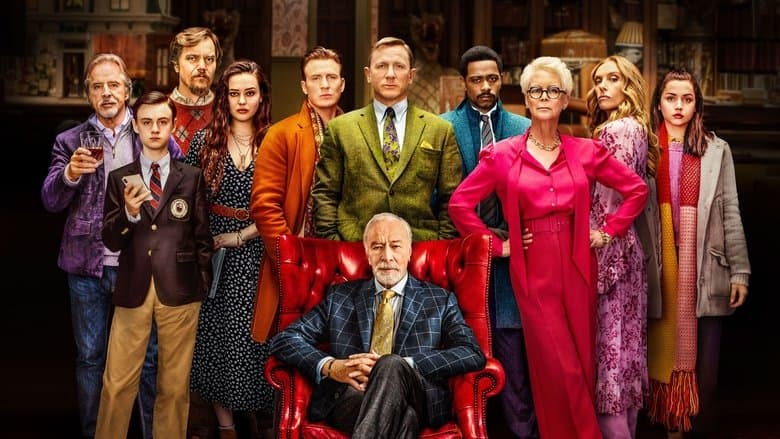
Famous Detectives from Fiction
Famous Detectives From Fiction is a structured entertainment dataset with 15 entries. Its fields include Detective, Created By, First Appearance. Community voting appears as a separate signal beside eligible rows and does not replace the source values.
Every row is shown below and is also available as CSV, JSON, or Excel.
Dataset details
- Table scope
- All 15 rows
- Fields
- 5 columns
- Source
- Community curated
- Data updated
- Mar 7, 2026
Included fields: Detective, Created By, First Appearance, Setting, Known For.
The table contains every record in this dataset; the same records are available in each download format.
Preview observations
No reliable range or grouping can be calculated from the loaded rows without interpreting the source data.
Useful for
- Comparing Detective, Created By, and First Appearance across entertainment entries
- Building reference tables, charts, or analyses from 15 downloadable records
Detective↕ | Created By↕ | First Appearance↕ | Setting↕ | Known For↕ |
|---|---|---|---|---|
Sherlock Holmes | Arthur Conan Doyle | 1887 (A Study in Scarlet) | Victorian London | The most famous fictional character ever created, Holmes invented the archetype of the brilliant eccentric detective who solves crimes through pure logic and observation, his methods of deductive reasoning influenced real forensic science and the phrase 'elementary, my dear Watson' — which he never actually says in the original stories — entered everyday language, Doyle tried to kill him off at Reichenbach Falls in 1893 but public outcry forced him to bring Holmes back, portrayed by over 75 actors in more than 250 adaptations making him a Guinness World Record holder for the most-portrayed literary character in film and television history |
Hercule Poirot | Agatha Christie | 1920 (The Mysterious Affair at Styles) | Interwar England & Europe | The fastidious Belgian detective with his waxed moustache, egg-shaped head, and 'little grey cells' solved 33 novels and over 50 short stories making his creator the best-selling fiction writer of all time, Poirot relies on psychology rather than physical evidence preferring to sit in an armchair and think rather than crawl around on floors with a magnifying glass, Christie grew so tired of him she called him 'a detestable, bombastic, tiresome, ego-centric little creep' but could never stop writing him, his final case 'Curtain' was published in 1975 and made him the only fictional character to receive a front-page obituary in the New York Times |
Miss Marple | Agatha Christie | 1927 (The Tuesday Night Club) | St. Mary Mead, English countryside | A seemingly harmless elderly spinster who solves murders by comparing them to the petty dramas of her tiny village of St. Mary Mead, Marple's genius is that she understands human nature so deeply that she recognizes the same patterns of greed, jealousy, and cruelty everywhere, she is perpetually underestimated because she looks like a sweet old lady knitting in the corner which is exactly what makes her so dangerous to criminals, Christie based her partly on her own grandmother and the character proved that the most powerful detective tool is not a microscope but a lifetime of watching people behave badly in small communities |
Philip Marlowe | Raymond Chandler | 1939 (The Big Sleep) | 1930s–1950s Los Angeles | The definitive hard-boiled private eye, Marlowe walks the mean streets of Los Angeles with a code of honor that the corrupt world around him constantly tries to break, Chandler's prose elevated the detective novel into literature with lines like 'She gave me a smile I could feel in my hip pocket' and 'It was a blonde, a blonde to make a bishop kick a hole in a stained-glass window,' Marlowe drinks too much, gets beaten up regularly, and barely makes enough to pay his rent but refuses to compromise his integrity, Humphrey Bogart's portrayal in The Big Sleep defined the trench-coat-and-fedora detective image that persists to this day |
Inspector Morse | Colin Dexter | 1975 (Last Bus to Woodstock) | Oxford, England | A grumpy, beer-drinking, opera-loving, crossword-obsessed Oxford detective whose first name was kept secret for almost the entire series — it was revealed as Endeavour only in the penultimate novel, Morse is brilliant but deeply flawed, perpetually lonely, and terrible with women, John Thaw's portrayal in the ITV series made him a British cultural institution and the show's use of Oxford's dreaming spires as a backdrop for murder made the city synonymous with genteel homicide, the character spawned two successful spin-offs in Lewis and Endeavour proving that a detective's appeal lies not in their perfection but in their very human imperfections |
Sam Spade | Dashiell Hammett | 1930 (The Maltese Falcon) | 1920s San Francisco | The original hard-boiled detective who predates and influenced every noir private eye that followed, Spade is morally ambiguous in ways that shocked 1930s readers — he sleeps with his partner's wife, works every angle for personal advantage, and only does the right thing when it happens to coincide with self-interest, Hammett was a real Pinkerton detective and his firsthand experience gave Spade an authenticity that armchair writers could never match, Humphrey Bogart's portrayal in the 1941 film defined the cinematic detective archetype so completely that the American Film Institute named Spade the number-three greatest movie hero of all time |
Inspector Maigret | Georges Simenon | 1931 (Pietr the Latvian) | Paris, France | The pipe-smoking Commissaire of the Police Judiciaire who solves crimes not through forensic evidence or flashy deduction but by immersing himself in the atmosphere of a place and the psychology of its people, Simenon wrote 75 Maigret novels and 28 short stories making it one of the most prolific detective series ever, Maigret drinks calvados with witnesses, eats his wife's cooking between interrogations, and approaches criminals with an empathy that borders on compassion, he represents the continental European detective tradition where understanding why someone committed a crime matters as much as proving they did it |
Nancy Drew | Edward Stratemeyer (various ghostwriters) | 1930 (The Secret of the Old Clock) | River Heights, USA | The teenage amateur detective who has been solving mysteries for nearly a century and inspired more women to enter law, journalism, and law enforcement than any real person, Nancy Drew was brave, smart, independent, and drove her own car in 1930 when that was still radical for a female character, the series has sold over 200 million copies and been translated into 45 languages, Supreme Court Justices Sandra Day O'Connor, Ruth Bader Ginsburg, and Sonia Sotomayor have all cited Nancy Drew as a childhood influence, she proved that a girl detective could outsell every boy detective on the shelf |
Auguste Dupin | Edgar Allan Poe | 1841 (The Murders in the Rue Morgue) | Paris, France | The original fictional detective who invented the genre itself, Poe created the template that every mystery writer since has followed — a brilliant eccentric amateur who outsmarts the police, narrated by a less intelligent friend, solving a seemingly impossible locked-room murder through pure ratiocination, Dupin appeared in only three short stories but those three stories created an entire literary genre, Arthur Conan Doyle openly acknowledged that Sherlock Holmes would not exist without Dupin, the character whose three brief appearances generated more literary offspring than perhaps any other fictional creation in history |
Jessica Fletcher | Peter S. Fischer, Richard Levinson & William Link | 1984 (Murder, She Wrote TV series) | Cabot Cove, Maine | A retired English teacher turned mystery novelist who stumbles upon murders at a statistically impossible rate — the fictional town of Cabot Cove would have a higher murder rate than Honduras if it were real, Angela Lansbury played her for 12 seasons and 264 episodes making Murder She Wrote one of the longest-running detective shows in television history, Fletcher is warm, polite, and grandmotherly but also relentless and impossible to fool, the show proved that a detective series starring a woman over 60 could dominate prime-time ratings for over a decade, Lansbury was nominated for 12 Emmy Awards for the role and never won which remains one of television's great injustices |
Columbo | Richard Levinson & William Link | 1968 (Prescription: Murder TV movie) | Los Angeles, California | The rumpled, cigar-smoking LAPD lieutenant in a wrinkled raincoat who appears bumbling and confused but is actually the smartest person in every room, the show's revolutionary inverted mystery format shows the murder first then follows Columbo as he methodically dismantles the killer's alibi, Peter Falk made 'Just one more thing' the most famous catchphrase in detective fiction, the killers are always wealthy, arrogant, and sophisticated which makes watching a working-class cop outthink them deeply satisfying class commentary, Falk played the role for 35 years across 69 episodes and never once removed the raincoat on camera |
Father Brown | G. K. Chesterton | 1911 (The Innocence of Father Brown) | Various locations, England | A short, stumpy, umbrella-carrying Catholic priest who solves crimes by understanding sin from the confessional rather than clues from the crime scene, Chesterton's radical idea was that a priest who has heard thousands of confessions understands evil better than any detective who merely studies it from the outside, Father Brown converts criminals through compassion rather than handing them to the police, he represents the theological detective tradition where the mystery is not just whodunit but why human beings choose darkness, the character influenced real-life priest-detectives and the BBC revival series has run since 2013 proving the concept still resonates |
Lord Peter Wimsey | Dorothy L. Sayers | 1923 (Whose Body?) | Interwar England | An aristocratic amateur detective who collects rare books, plays the piano, and solves murders with the casual brilliance of someone who has never had to work a day in his life, Sayers used Wimsey to explore serious themes of class, justice, and PTSD — he suffers shell shock from World War I that manifests as breakdowns after solving cases, his romance with Harriet Vane across four novels is one of the great love stories in detective fiction and was groundbreaking in depicting an equal intellectual partnership between a man and a woman in the 1930s, Sayers elevated the detective novel from puzzle to literature without sacrificing the puzzle |
Nero Wolfe | Rex Stout | 1934 (Fer-de-Lance) | New York City | A reclusive, obese, orchid-growing, beer-drinking genius who refuses to leave his Manhattan brownstone and instead sends his wisecracking assistant Archie Goodwin out to do the legwork, Wolfe weighs a seventh of a ton, eats meals prepared by a personal Swiss chef, tends to his rooftop greenhouse of 10,000 orchids, and considers leaving his house a personal affront to his dignity, the dynamic between the sedentary intellectual Wolfe and the street-smart Goodwin influenced every buddy-detective pairing that followed including Sherlock and Watson's modern reimaginings, Stout wrote 33 Wolfe novels and 39 novellas over 41 years and the character never once voluntarily walked more than a block |
Inspector Lestrade | Arthur Conan Doyle | 1887 (A Study in Scarlet) | Victorian London | Scotland Yard's most persistent inspector who appears in 13 of the original Sherlock Holmes stories and represents the establishment detective that Holmes perpetually outshines, Lestrade is competent enough to rise to inspector rank but lacks Holmes's brilliance which makes him the perfect foil — he does the hard unglamorous police work while Holmes swoops in with the flash of genius, Doyle portrayed him sympathetically as a 'bulldog' who tenaciously follows trails even when they lead nowhere, modern adaptations have rehabilitated him from a bumbling fool to a capable officer who wisely recognizes when he needs Holmes's help, the detective who proved that being second-best to the greatest detective ever is still a perfectly respectable career |
Free to explore · No signup needed
Related Datasets
More in Entertainment
Harry Potter Characters
A selected guide to prominent Harry Potter film characters, their performers, Hogwarts houses, roles, and notable story associations.
Greatest Movies of All Time
The greatest films ever made ranked by critical acclaim using a composite of IMDb user ratings and Rotten Tomatoes critic scores. Includes iconic entries from every decade of cinema history.
Best Video Games of All Time
Video games widely considered among the best ever made.
Best TV Shows of All Time
The greatest television series of all time ranked by critical acclaim using IMDb ratings. Spans broadcast, cable, and streaming across all eras.
Best-Selling Comic Series
The best-selling comic book series of all time.
Board Games
Classic and modern board games — from timeless chess to modern Euro-game masterpieces.